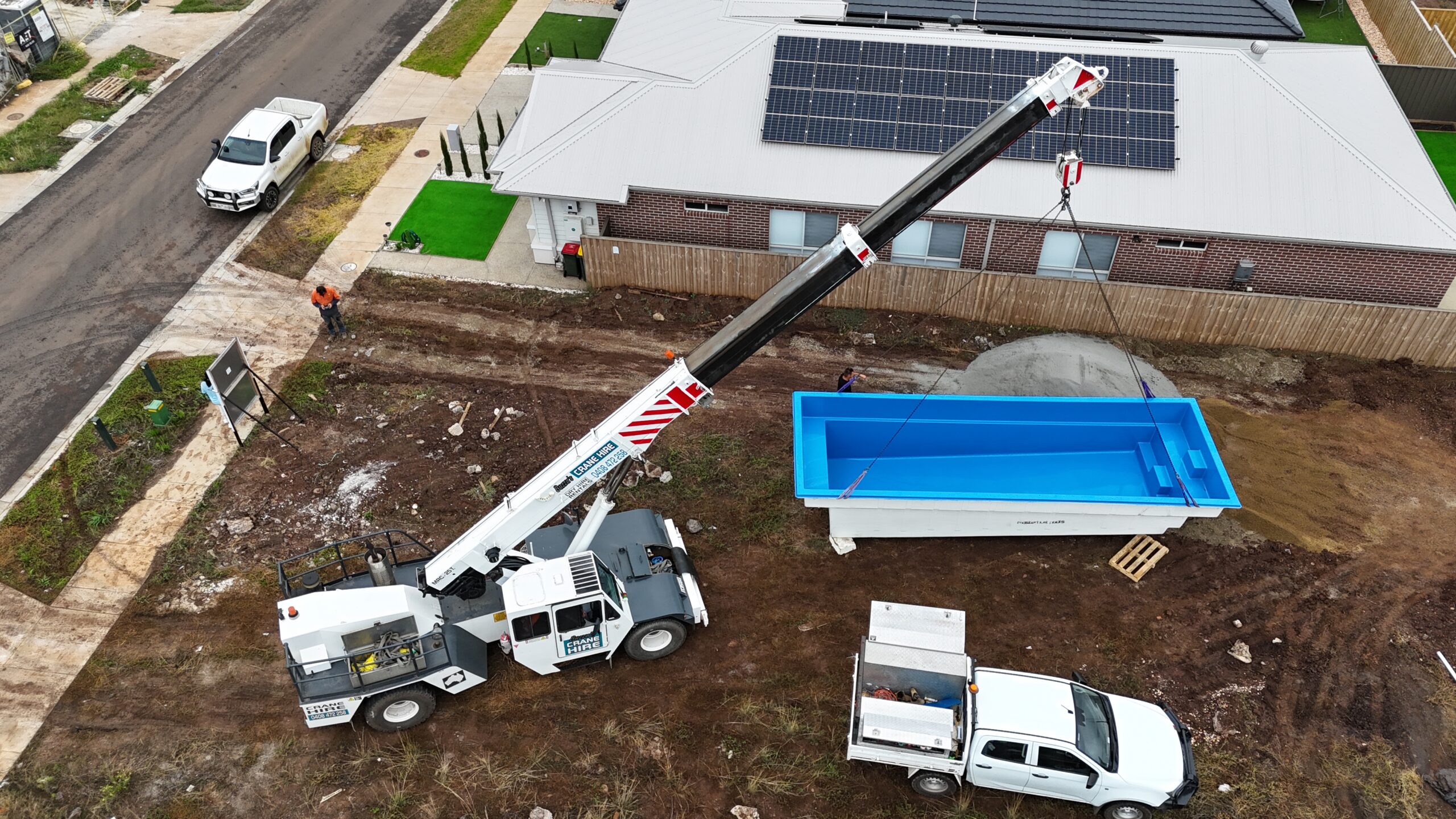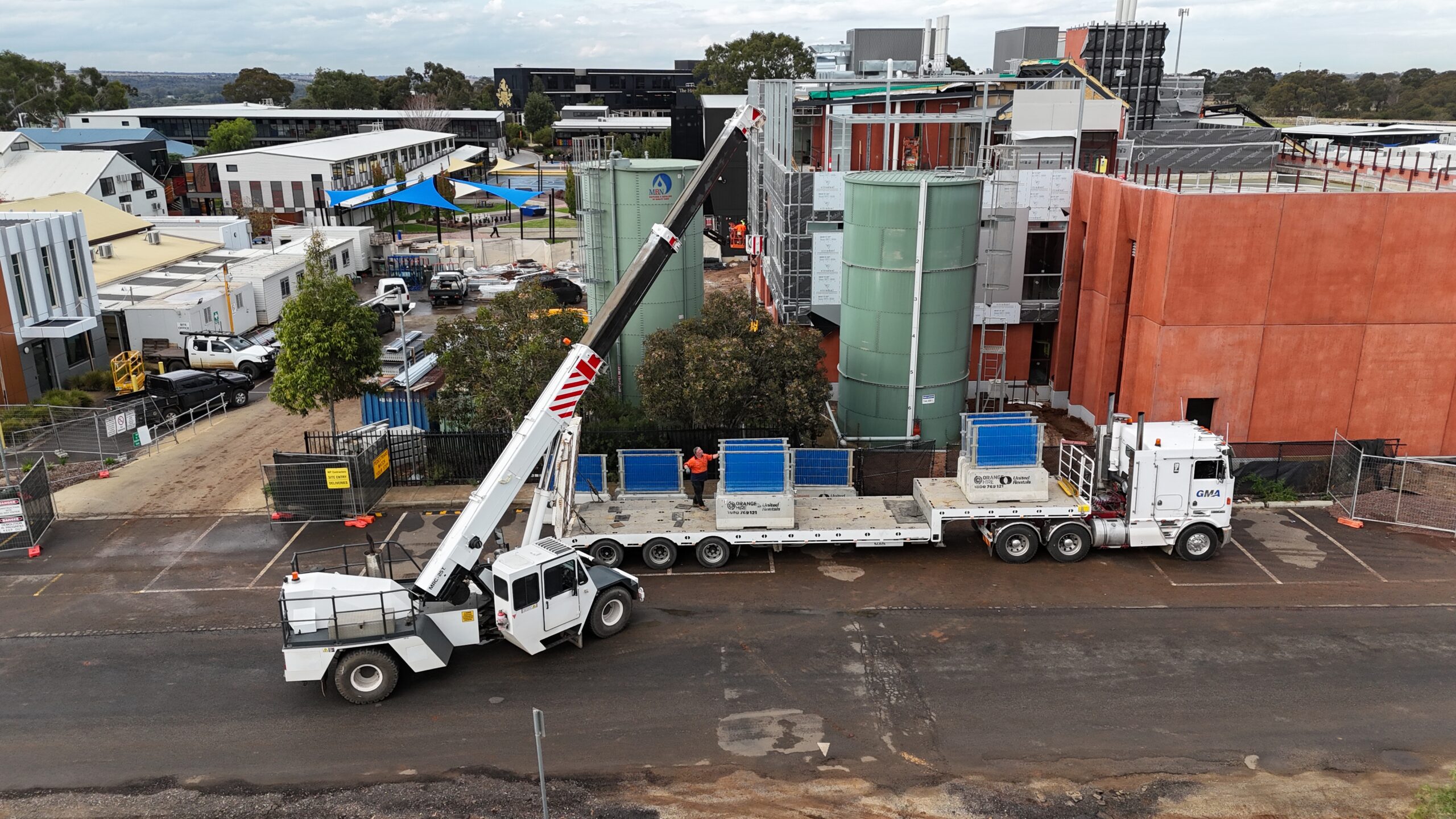

Many crane jobs happen on private land. The crane drives onto the driveway, sets up and lifts. No permit needed. But a lot of Melbourne jobs aren’t like that. The house sits close to the street. The block is too tight. The only place to set up is the road, the footpath or the nature strip.
That is public land, and the council looks after it. To use it, you usually need a crane permit. This guide explains when you need one, what the council will ask for and how to keep the job on time. Crane2U plans street-side lifts across Melbourne, Bacchus Marsh, Melton and the western suburbs, and we can lodge the permit for you.
When do you need a crane permit in Melbourne?
You will usually need a council permit if any part of the job sits on public land. That includes:
- the crane parked or set up on the road
- outriggers or pads on the footpath or nature strip
- the boom or load swinging over the footpath or road
- part of the road or footpath closed to people or cars
- trucks unloading on the street while the crane lifts
If the crane, its outriggers and the load all stay inside your property, you often don’t need a road permit. It is still worth checking. Some councils also want to know about lifts over a footpath, even when the crane is on private land.
What is the permit called?
Each council uses its own name. In Victoria you will see names like “occupation of road permit”, “occupy space on footpath or nature strip” or “mobile crane permit”. They all cover the same idea: permission to use part of a public road or footpath for a set time.
You apply to the council where the job is. A lift in Werribee or Hoppers Crossing goes to Wyndham City Council. A lift in Sunshine West, Deer Park or St Albans goes to Brimbank City Council. A lift in Melton goes to Melton City Council. Search your council’s website for “road occupation permit” or “crane permit”.
If the road is a main road managed by the state, you may also need consent from the Department of Transport and Planning. We can tell you if your street is one of them.
What the council will ask for
Most councils want the same basic details:
- The address and the exact spot. Where on the road or footpath the crane will set up.
- The date and hours. Councils often limit road work to set hours, and some don’t allow it on weekends.
- The crane and its size. The model, its weight and the area the outriggers cover.
- A site plan. A simple drawing showing the crane, the load and the area you will close off.
- A traffic management plan. How cars, bikes and people will get past safely.
- Insurance. A certificate of public liability insurance, often for a set amount.
Some councils also ask for a bond, a daily fee, or photos of the footpath and kerb before the job. That way any damage can be checked afterwards.
Traffic management: the part that takes planning
The traffic management plan is often what decides if the permit is approved. It shows where signs, cones and barriers will go. It also shows whether you need traffic controllers on the day.
On a quiet side street, the plan may be simple: close the footpath, set up a safe walking detour and put out signs. On a busy road, you may need a lane closure and traffic controllers. Crane2U provides traffic management for crane lifts, so the plan matches the crane set-up exactly.
How long does a crane permit take?
It depends on the council and the job. A simple footpath permit can be quick. Lane closures and main roads take longer. Some councils want the application well before the job date.
The safest move is to apply as soon as the lift date is likely. Don’t book trucks, glaziers or a concrete pour until the permit is approved. If the permit is late, the whole day moves.
What if it’s an emergency?
Some jobs can’t wait. A fallen tree on a house or a damaged structure needs action now. In a real emergency, councils and emergency services can move faster. Call our emergency crane hire team and we will help you work through what’s needed.
How Crane2U helps with your permit
We plan street-side lifts every week. When you book with us, we can:
- check if your job needs a permit at all
- lodge the council permit for you, with the crane details and outrigger loads
- draw up the site plan with you, or start one with our free crane lift planner
- prepare the traffic management plan and supply traffic controllers
- prepare an engineered lift plan for heavy or complex lifts
- send our dogman and riggers to run the lift safely on the day
A permit is easier to get when the plan is clear. We know what councils look for and can help you get it right the first time.
What does a crane permit cost?
Council fees, bonds and traffic management all add to the job. They vary by council, by how much road you close and for how long. Our crane hire rates page lists our permit submission and traffic plan fees, and our guide on what affects a crane hire quote explains every other cost.
To get an accurate price, send us the address, the load, where you want the crane to stand and your preferred date.
Book a street-side crane lift
If your crane needs to sit on the road or footpath, talk to us early. We will tell you what permit you need and help you plan the lift. Get a quote from Crane2U today. For tight blocks and small streets, see our tight access crane hire service, or read about our crane hire in Werribee and the western suburbs.
Crane permit FAQs
Usually not, if the crane, outriggers and load stay inside your property. If the boom or load swings over the footpath or road, check with your council.
It can be you, your builder or the crane company. Crane2U can lodge it for you. Whoever applies, the council will want the crane details, a site plan and a traffic management plan.
As early as you can. Each council has its own timeframe, and lane closures or main roads take longer. Don’t lock in the lift date until the permit is approved.
Usually, yes. Most councils want a traffic management plan with the permit. Busy roads may also need traffic controllers on the day.