Wet and Dry Crane
Hire in Melbourne
The Difference Is Responsibility, Not Just Price
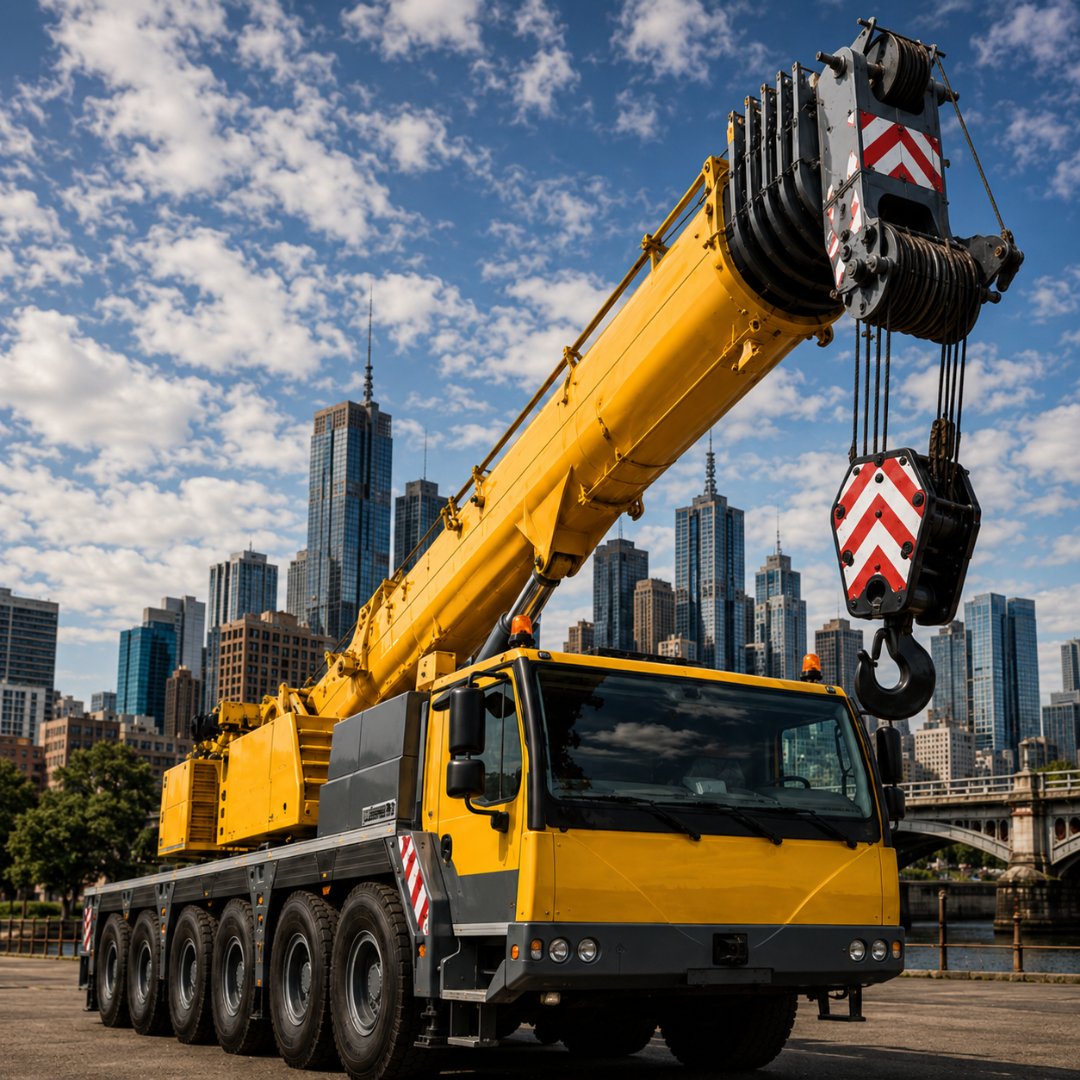
Wet hire means the crane arrives with a licensed operator, and usually the crew, fuel, maintenance and insurance that go with it. Dry hire means you get the machine only, and you supply the ticketed operator, the riggers and dogmen, and the insurance that covers their work.
The choice looks like a cost decision. It is actually a licensing and liability decision, and the cost follows from that rather than the other way round.
Read This Before You Choose Dry Hire
Dry hire is the right choice for some operations, but it is also where expensive crane hire mistakes happen. A crane hire company’s insurance applies only when the machine is operated by a licensed, competent person named in the hire agreement. If someone without the correct High Risk Work Licence for that crane class takes control, the agreement is breached and the insurance may not respond, leaving the hirer exposed. Dry hire should also be assessed on its total cost, including transport, fuel, maintenance responsibilities and crew expenses. For tracked machines transported on a float, mobilisation can form a significant part of the final cost. Tell us about the job and the crew you have, and we will recommend the right arrangement across Melbourne, Geelong, Bacchus Marsh and Western Victoria.
What Wet Hire Includes
Five things that come with the crane:
Licensed operator. Ticketed for the specific crane class, familiar with the machine and its load charts.
Crew where required. Riggers, dogmen and spotters supplied to match the complexity of the lift rather than left for you to source.
Compliance managed. Pre-start inspections, log books, annual inspections and certification all handled and current.
Insurance in place. Cover for the machine and the lifting work, with certificates available before the job.
Fewer variables to price. Fuel, maintenance and operator costs sit inside the rate, which makes the job easier to budget accurately.
What Wet Hire Includes
Five things that come with the crane:
Licensed operator.
Crew where required
Compliance managed
Insurance in place
Fewer variables to price
Which Arrangement Suits Your Job?
Wet Hire
The right answer for the large majority of jobs. One-off lifts, residential work, commercial projects, and anywhere you do not have ticketed crane operators on the payroll.
Dry Hire
Worth considering where you run a long program, hold the correct HRW licence classes in-house, carry your own public liability and workers compensation, and can meet the compliance obligations during hire.
Mixed Arrangement
Longer projects sometimes run dry hire for routine work with wet hire brought in for complex or high risk lifts. We can structure it that way where it makes sense.
Call us now at 0457 000 637.
How it Works
How it Works
Start with the job and the crew you have.
Start with the job and the crew you have.
Tell us the job and the crew
What is being lifted, where, over what period, and whether you hold ticketed operators and the relevant insurances in-house.
Tell us the job and the crew
What is being lifted, where, over what period, and whether you hold ticketed operators and the relevant insurances in-house.
Arrangement recommended
We confirm which machines suit the work, whether dry hire is available for them, and what each arrangement would actually cost including transport.
Arrangement recommended
We confirm which machines suit the work, whether dry hire is available for them, and what each arrangement would actually cost including transport.
Documentation exchanged
For wet hire, we supply operator tickets and insurance certificates. For dry hire, we verify licence classes and your insurance before release.
Documentation exchanged
For wet hire, we supply operator tickets and insurance certificates. For dry hire, we verify licence classes and your insurance before release.
Machine on site
Crane delivered or driven to site, handover completed, and the work proceeds under the agreed arrangement.
Machine on site
Crane delivered or driven to site, handover completed, and the work proceeds under the agreed arrangement.
What Dry Hire Requires From You
Six obligations that transfer when you take the machine without an operator:
Correctly licensed operators. High Risk Work Licence of the right class for the specific crane, verified before the machine is operated.
Your own lifting crew. Riggers, dogmen and spotters sourced, ticketed and supervised by you where the lifts require them.
Public liability cover. Your policy responds to the work being performed, not ours.
Workers compensation. Cover for your operators and crew for the duration of the hire.
Daily checks and records. Pre-start inspections and log book entries maintained through the hire period.
Site supervision and lift planning. Lift studies, SWMS and safe operation on site sit with you unless separately arranged.
Not all machines are available dry. Some units in our fleet are supplied wet only because setup and load chart interpretation on constrained sites carry real risk. Call 0457 000 637 to check availability for the machine you have in mind.
What Dry Hire Requires From You
Six obligations that transfer when you take the machine without an operator:
Every Lift Meets Safety Standard
What is wet hire?
Hiring the crane with a licensed operator supplied by the crane company. It typically also covers fuel, maintenance, compliance and insurance for the lifting work, and riggers or dogmen where the lift requires them.
What is dry hire?
Hiring the crane only. You supply the operator, who must hold the correct High Risk Work Licence class, plus any riggers and dogmen, your own public liability and workers compensation cover, and the daily checks during the hire.
Which is cheaper, wet or dry hire?
The machine rate is lower on dry hire, but the total cost often is not. Once your operator wages, crew, insurance, fuel and transport are counted, dry hire only wins where you already have ticketed people on the payroll and the hire runs long enough to spread the mobilisation cost.
What licence does a crane operator need?
A High Risk Work Licence of the class matching the specific crane. Different crane types and capacities require different classes, so the licence has to match the machine, not just say crane on it. We confirm the required class before releasing a machine on dry hire.
What happens if an unlicensed person operates a dry hired crane?
The hire agreement is breached and the insurance cover does not respond. Any damage, injury or third party claim then sits with the hirer. It is the single most costly mistake in dry hire and it is entirely avoidable by checking the licence class beforehand.
Who insures what?
On wet hire we insure the machine and the lifting work, and you carry your normal site cover. On dry hire we still insure the machine, but that cover depends on it being operated by a licensed person as declared, and you carry public liability and workers compensation for your crew.
Can I dry hire any crane in your fleet?
No. Some machines are supplied wet only, particularly where outrigger configuration, load chart interpretation or confined site setup carries significant risk. Ask about the specific machine and we will tell you plainly.
Do I still need riggers and dogmen on dry hire?
Wherever the lift requires them, yes, and sourcing them becomes your responsibility. We can supply riggers, dogmen and spotters separately if you have the machine but not the crew.
Is there a minimum hire period?
Yes. Most crane work carries a minimum booking that covers travel to and from site, commonly a few hours for wet hire. Dry hire is usually arranged over longer periods, where the economics actually work.
Does dry hire include fuel and maintenance?
Fuel is your cost during the hire. The machine is supplied serviced and compliant, and daily pre-start checks and log book entries become your responsibility while it is in your possession.
What does crane hire cost in Melbourne?
Wet hire is quoted hourly or daily including the operator. Dry hire is quoted on the machine with transport separate. Call 0457 000 637 with the job details and we will price both where dry hire is available.
Which areas do you cover?
All Melbourne metro suburbs, with Maidstone, Werribee and Caroline Springs among the areas we attend most often, extending through Geelong, Bacchus Marsh, Melton and Ballarat, plus regional Victoria.
0457 000 637
Open 24 hours
25 Rowsley Station Rd, Maddingley VIC 3340
Contact Us
Machines reach site from our depot at 25 Rowsley Station Rd, Maddingley VIC 3340, directly on the Western Freeway. Wheeled cranes drive to site and tracked machines travel on a float, which matters more on dry hire because transport is quoted separately and is often the larger number. Maidstone work is almost entirely wet hire. Lifts there involve street occupation, permits, overhead services and tight setup areas, which is exactly the environment where an operator who knows the machine earns their cost several times over.