Transport & Support Equipment in Melbourne
Haulage, Traffic Management, Crew and Lift Engineering
A crane on its own rarely completes a job. Depending on the lift, you may also need float transport to get equipment to site, a traffic management plan for the street, ticketed dogmen on the hook, an electrical spotter near powerlines, and an engineered lift study signed off before anything moves.
Crane2U supplies all of it. Not because bundling sounds good on a website, but because coordinating five suppliers around one lift date is how jobs slip.
Heavy Machinery
Plant Equipment
Oversized Loads
Industrial Equipment

Transport & Support Equipment in Melbourne
Reliable Transport, Heavy Haulage & Site Support Solutions
What Your Lift Actually Needs
Most crane bookings involve more than choosing the right machine. Permits, traffic control, spotters and other support services depend on where the crane stands, what it lifts over, nearby live services and council or principal contractor requirements. A lift in a private yard may need very little, while the same lift from a suburban street under powerlines requires more planning. We assess these requirements during the quoting stage to prevent delays and unexpected costs on jobs across Melbourne, Geelong, Bacchus Marsh and Western Victoria. Send us the lift details, and we will list what the job needs.
Why Source It From One Supplier
Five practical reasons, beyond the obvious convenience:
One point of coordination. The crane, the crew, the transport, and the permits are all scheduled against the same date by the same people.
Fewer scheduling failures. No situation where the crane arrives and the traffic controllers do not, or the permit covers the wrong day.
Requirements identified upfront. Support needs assessed during quoting rather than surfacing as variations after the job starts.
Single accountability. One contract, one invoice, and one party responsible when something needs sorting on the day.
Consistent documentation. Lift plans, SWMS, permits and crew tickets prepared as one package rather than assembled from several sources.
Why Source It From One Supplier
Five practical reasons, beyond the obvious convenience:
One point of coordination
Fewer scheduling failures
Requirements identified upfront
Single accountability
Consistent documentation
Transport & Support Equipment
Transport & Support Equipment

Crane Truck

Tilt Tray Truck Crane

Local Transport

Traffic Management
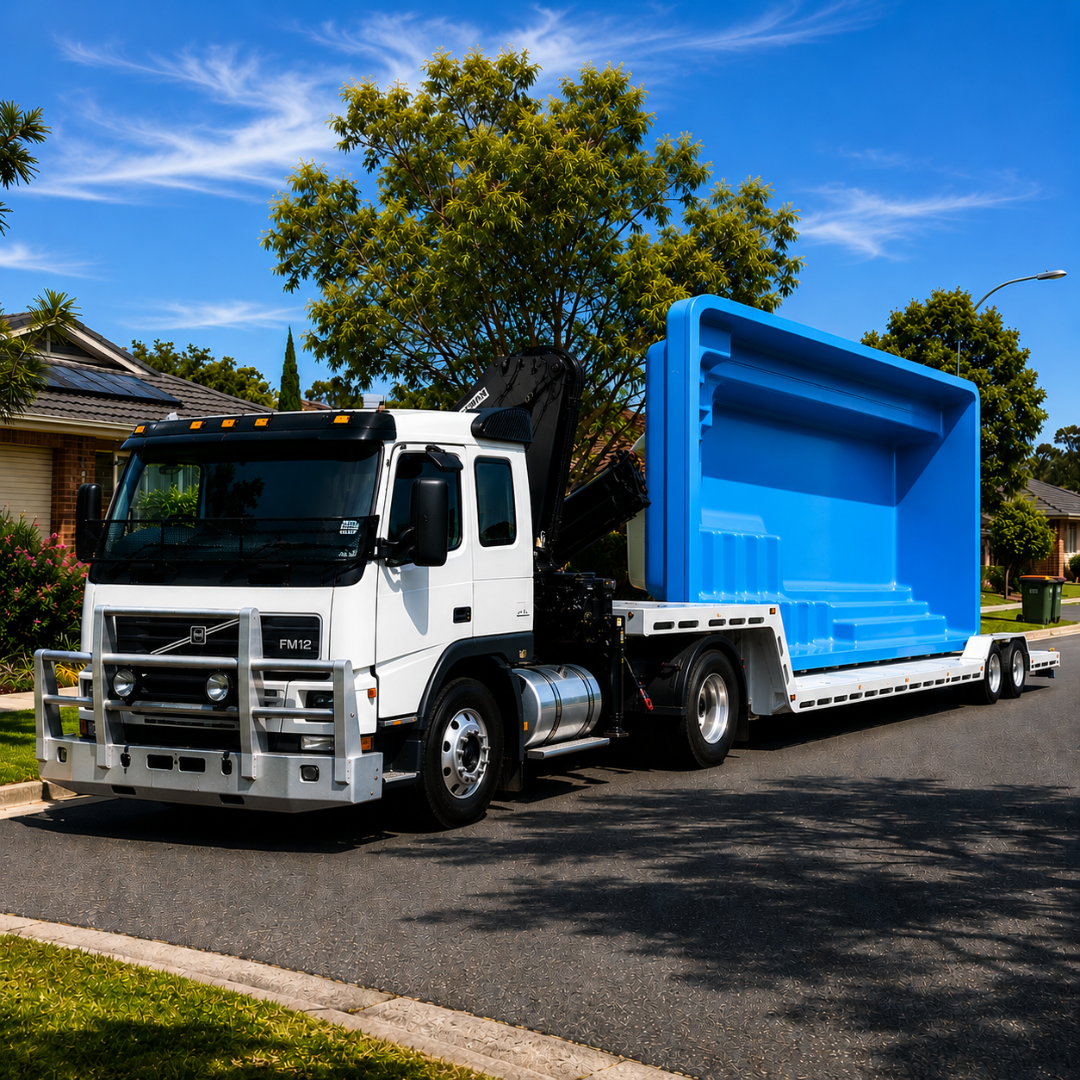
Pool Transport

Heavy Haulage Transport
The Services We Supply
Heavy Haulage and Transport
Float transport for tracked machines, oversize load movement, machinery relocation and plant delivery, with permits and route planning handled.
Traffic Management
Road occupancy applications, traffic control plans, accredited traffic controllers and council coordination for work on roads and footpaths.
Dogmen and Riggers
Ticketed dogmen and riggers supplied for slinging, load control and directing the crane where the load sits outside the operator's view.
Electrical Spotters
Accredited spotters for work near live overhead and underground services, including assessment of exclusion zones before the lift.
Engineered Lift Planning
Lift studies, ground bearing pressure calculations, rigging design, SWMS and documented methodology prepared in-house.
Tracked Carriers and Material Handling
Compact tracked carriers for moving materials across sites where access or ground conditions rule out wheeled equipment.
Call us now at 0457 000 637.
How it Comes Together
How it Comes Together
Start with the lift and the location.
Start with the lift and the location.
Tell us the lift and the location
Load details, where the crane will stand, what is overhead, whether the road is involved, and any contractor or council requirements you already know about.
Tell us the lift and the location
Load details, where the crane will stand, what is overhead, whether the road is involved, and any contractor or council requirements you already know about.
Requirements identified
We list what the job needs, flag anything with a long lead time, and issue a quote with every element priced separately.
Requirements identified
We list what the job needs, flag anything with a long lead time, and issue a quote with every element priced separately.
Approvals and bookings
Permits lodged, traffic management planned, crew allocated, transport scheduled, and lift documentation prepared.
Approvals and bookings
Permits lodged, traffic management planned, crew allocated, transport scheduled, and lift documentation prepared.
Coordinated on the day
Everything arrives according to the same schedule, the work proceeds, and documentation is provided on completion.
Coordinated on the day
Everything arrives according to the same schedule, the work proceeds, and documentation is provided on completion.
How We Work
Six things that apply across all support services:
Requirements assessed at quoting. What the job needs is identified during the site review, not discovered on the day.
Everything itemized. Crane, crew, transport, permits, and traffic management priced separately so you can see what each element costs.
Accredited personnel only. Dogmen, riggers, spotters, and traffic controllers hold current tickets and accreditation for the work.
Permits lodged by us. Applications prepared and submitted, with council and authority coordination handled as part of the engagement.
Documentation supplied. Lift plans, SWMS, permits and certificates provided as a package before work commences.
Scheduling held together. All elements booked against the same date and rescheduled together if the program moves.
Program work with lifting across several weeks? Call 0457 000 637, and we will set up standing arrangements rather than quoting each job separately.
How We Work
Six things that apply across all support services:
Every Lift Meets Safety Standard
What is included in standard crane hire?
The crane and a licensed operator. Everything else, including riggers, dogmen, spotters, traffic management, permits, and lift documentation, is quoted separately because not every job needs them.
Do I need a dogman?
Generally, where the load requires slinging judgment, or where it travels outside the operator’s line of sight and needs directing. Many sites use their own ticketed crew. We assess the requirement during quoting and supply dogmen where the lift needs them.
When do I need an electrical spotter?
Where lifting occurs near live overhead powerlines or other electrical assets, within the exclusion zones that apply to the voltage involved, this is common on suburban streets. We assess overhead services during the site review and confirm what is required.
When do I need an electrical spotter?
It depends on what is being permitted. Road occupancy for a crane standing on a street is usually a local council matter. Oversize and overmass vehicle movements fall under the national heavy vehicle framework and VicRoads processes. We identify which applies and lodge the applications.
How long do permits take?
Council road occupancy permits typically need weeks rather than days, and oversize transport approvals vary by route. These are the most common reason a lift date moves, which is why we raise them at quoting stage.
Do I need an engineered lift study?
For complex, heavy or high-risk lifts, and wherever the principal contractor, building manager or council requires one. Ground bearing pressures, rigging design and documented methodology are prepared in-house.
Can I book crew or transport without hiring a crane?
Yes. Dogmen, riggers, spotters, traffic management and haulage can all be supplied on their own where you have the machine and need the support around it.
Can you move machines and plant, not just lift them?
Yes. Float transport, oversize load movement and machinery relocation are handled alongside crane work, and tracked carriers move material across sites where wheeled equipment cannot operate.
How far ahead should I book?
For straightforward private site lifts, book days in advance. Where permits, traffic management or oversize transport are involved, allow weeks. Bringing us in during planning almost always produces a better outcome than a late inquiry.
What does support equipment and crew cost?
Every element is priced separately, so a simple yard lift carries none of the costs a street lift does. Call 0457 000 637 with the job details, and we will itemize exactly what applies.
Which areas do you cover?
All Melbourne metro suburbs, with Maidstone, Werribee and Caroline Springs among the areas we attend most often, extending through Geelong, Bacchus Marsh, Melton and Ballarat. Regional and interstate work is arranged on request.
0457 000 637
Open 24 hours
25 Rowsley Station Rd, Maddingley VIC 3340
Contact Us
Our depot at 25 Rowsley Station Rd, Maddingley VIC 3340 sits directly on the Western Freeway, which matters more for transport work than for anything else we do. Oversize movements and float transport run on a route built for them rather than threading through suburban streets. Maidstone generates the most traffic management work. Narrow streets, parked cars and close boundaries mean cranes almost always occupy road space, so road occupancy permits and traffic control are standard rather than exceptional there.